Security Licence: 000219491
Master Licence: 000107700

Wired and wireless security cameras are both effective, but each suits different situations. The best option depends on your property, Wi-Fi coverage, recording requirements, and how much ongoing maintenance you want.
A wired camera system generally connects through Ethernet cables, often using PoE. This allows one cable to deliver both power and data. Because the connection does not rely on Wi-Fi, wired cameras are usually stable and dependable. For permanent installations in homes, shops, offices, or warehouses, they are often the better long-term choice. If you need continuous recording without worrying about weak wireless signals, wired cameras are usually more suitable.
Wireless cameras are generally simpler to install, although “wireless” does not always mean cable-free. Many Wi-Fi cameras still require a power connection. Battery-powered cameras are completely wire-free, but they need regular charging or solar support. This may be manageable for one or two cameras, but maintaining several battery cameras across a larger property can become inconvenient.
In simple terms:
Wired cameras: Best for reliable, permanent installations
Wireless cameras: Best for easy and flexible setups
Battery cameras: Best where installing cables is difficult
Wi-Fi coverage plays a major role in how well wireless cameras perform. A camera may work perfectly close to the router but lose connection near the garage, backyard, or side entrance.
Distance, brick walls, and other devices sharing the same network can weaken the signal. This can be a common issue in larger NSW homes where the router is indoors while cameras are positioned around the outside of the property.
Before installing a wireless camera, check the Wi-Fi signal at the exact location where the camera will be mounted.
Wireless cameras can be a practical choice for renters, apartments, video doorbells, and locations where installing cables is difficult. For example, someone renting an apartment in Parramatta may prefer a removable wireless camera for the front entrance instead of permanent cabling.
For a larger home in Blacktown with cameras covering the driveway, side access, backyard, and garage, a wired system may provide better long-term value.
A hybrid setup is another useful option. Wired cameras can protect key areas such as the driveway and backyard, while a wireless video doorbell covers the front entrance. This provides reliable recording where it matters most while keeping installation flexible.
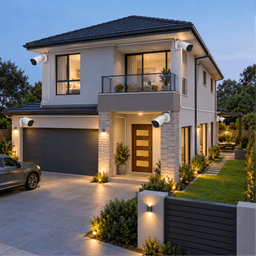
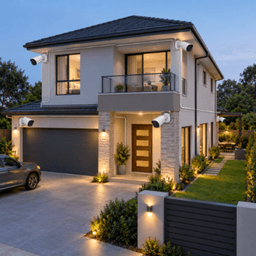
Wired cameras are often the better option when several cameras are being installed around a permanent property.
For example, a Blacktown homeowner who wants cameras monitoring the driveway, garage, backyard, and side access may benefit more from a wired setup.
Wired cameras provide a consistent connection and are easier to manage when multiple cameras need to record continuously.
They are particularly suitable for:
Large homes
Shops
Offices
Warehouses
Commercial properties
Garages and driveways
Properties needing continuous surveillance
Before choosing a security system, consider a few practical points:
Do you need 24/7 recording or only motion-based alerts?
Is the Wi-Fi strong at the planned camera location?
Are you comfortable recharging batteries regularly?
Do you own or rent the property?
Where will recordings be stored if the internet stops working?
There is no single camera system that is best for every property. Wired cameras are generally better for dependable connections, continuous recording, and permanent installations, while wireless cameras offer greater flexibility for rentals and hard-to-wire areas.
For NSW homes and businesses, the best approach is to use wired cameras where reliability is essential and wireless cameras where installation flexibility is more important.